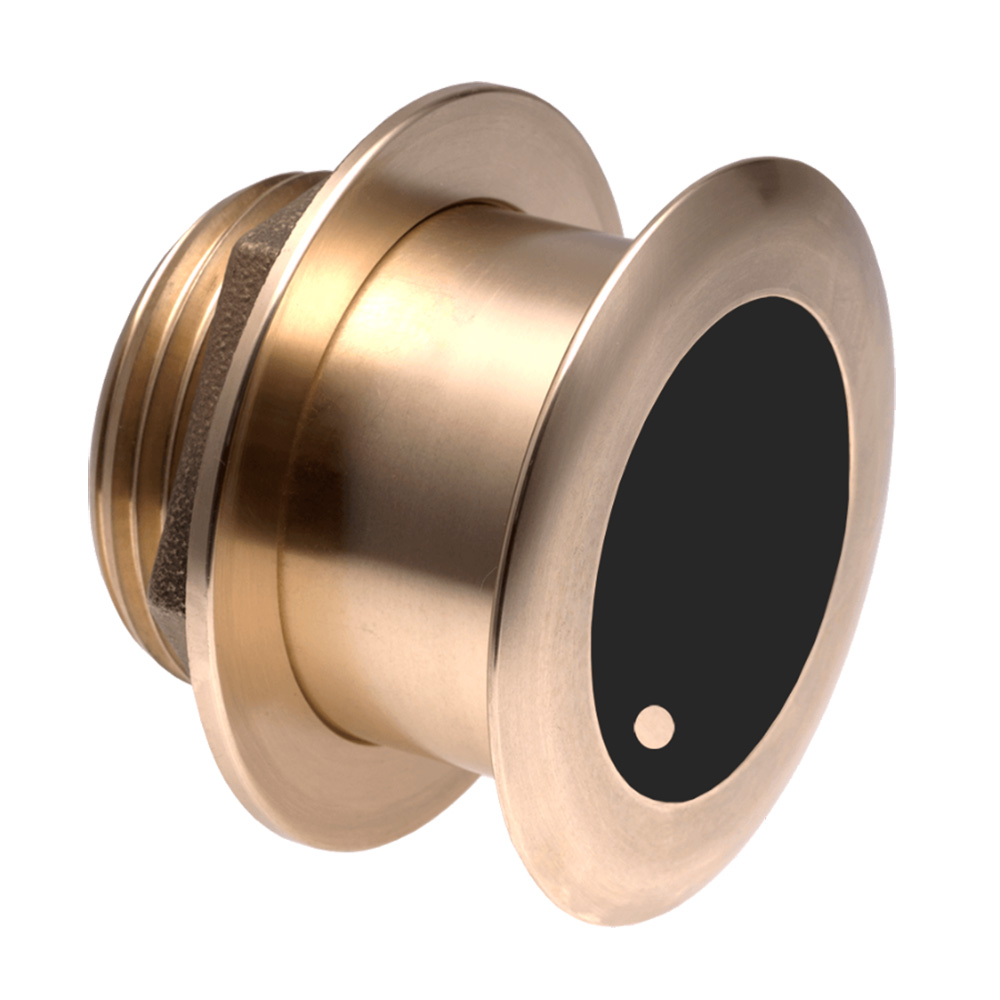
 Click to enlarge
Airmar B175MW Medium Ultra-Wide 20-Degree 1kW CHIRP Transducer Requires Mix & Match Cable
Manufacturer: AirmarPart #: B175C-20-MW-MMSKU: 103516
- 100 kHz
- Thru Hull
- Bronze
Item #: 103516
Category: Transducers
Currently out of stock. This item isn't available to order right now — check back soon or contact us for availability.
- Ships from US warehouses
- Free shipping on orders over $99
- Secure checkout — your info is protected
- Genuine marine-brand parts, not knockoffs
- 30-day returns
- Marine parts support — we know boats
Description
B175MW Medium Ultra-Wide 20-Degree 1kW CHIRP Transducer Requires Mix & Match Cable Airmar’s innovative transducer designs have revolutionized the fishing world, and they continue to do so with the Chirp-ready B175 Medium Ultra-Wide (MW) Tilted Element™ Thru-hull transducer. The B175MW takes transducer design and performance to a level by using medium frequency (60-100 kHz) with an incredible ultra-wide beamwidth ranging from 57-73° starboard to 16° average fore-aft.
Maximum coverage under the boat is achieved with this medium-frequency transducer, serving anglers who target pelagic species in the upper water column. Airmar’s Medium Ultra-Wide models are perfect for seeking deeper species with a frequency band from 60-100 kHz.
When paired with our other popular models such as the B275LHW, provides the angler with a broad set of frequencies (Low, Medium-Wide, High-Wide) to interrogate targets from deep to shallow. The B175MW Tilted Element Thru-hull is a 1 kW transducer housed in one of AIRMAR’s most popular Tilted Element housings which includes a ceramic element fixed at a 20°, 12° or 0° angle.
Because the transducer is installed almost flush with the hull, the tilted element corrects for the hull deadrise and orients the ceramic element vertically to ensure maximum echo returns to the transducer. Features: Depth and fast-response water-temperature sensor 1 kW with depth tracking down to 400 m (1,300') Medium frequency: 60-100 kHz 57° to 73° beamwidth (port/starboard) 16° average fore/aft 40 kHz of total bandwidth from one transducer Medium frequency for superior mid-depth performance and excellent fish-target separation Bronze housing for use on stepped, planing, or displacement hull Low-profile, thru-hull housing yields good resolution at speed when installed properly Exclusive Xducer ID® technology Specifications: Power Rating: 1 kW Max Deadrise Angle: 24° Housing: Bronze Functions: Depth, Temperature Hull Material: Fiberglass or wood Max Vessel LOA: Up to 11 m (
Specifications
| Brand | Airmar |
|---|---|
| Part Number | B175C-20-MW-MM |
| EverTide SKU | 103516 |
| UPC | 801769019544 |
| Frequency | 100 kHz |
| Mount | Thru Hull |
| Material | Bronze |
Specifications are provided by the manufacturer. Confirm fitment for your application before ordering, or contact us and we'll help.
Compare similar products
 |  |  |  | |
|---|---|---|---|---|
| Power | — | — | 300 W | 600 W |
| Frequency | 100 kHz | 112 kHz | 155 kHz | 50/200 kHz |
| Connector | — | — | 8-pin | 9-pin |
| Mount | Thru Hull | In Hull | Thru Hull | Thru Hull |
| Material | Bronze | — | Bronze | Bronze |
Complete your setup
Airmar 599 Low/High Frequency - In-Hull Chirp Transducer w/o Connector
$6599.00Airmar B150M Bronze 20 Degree Thru-Hull 300W 8-Pin
$459.99Airmar B164 Bronze Thru-Hull - 50/200 kHz - 1 kW - 12° Tilted Element - Requires Mix & Match Cable
$1264.00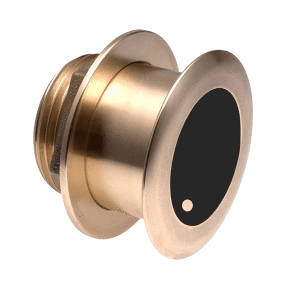
Airmar B164 Bronze Thru-Hull - 50/200 kHz - 1 kW - 20° Tilted Element - Requires Mix & Match Cable
$1264.00Returns & warranty
Returns are accepted within 30 dayson items that are unused and in their original packaging. Some items may be subject to a manufacturer restocking fee. Special-order items may not be eligible — if you're unsure, ask us before ordering.
Airmar productscarry the manufacturer's standard warranty. For a warranty claim or a return authorization, see our full returns policy or contact us.
Marine Navigation & Instruments — frequently asked
- What’s the difference between a chartplotter and a fishfinder?
- A chartplotter shows your GPS position on electronic charts for navigation. A fishfinder uses sonar to show what’s below the boat — depth, bottom structure, and fish. Many modern units combine both, and networked systems can share data across displays.
- Do I really need a VHF radio?
- For safety, yes. A VHF radio is the primary way to reach other vessels and the Coast Guard, and a DSC-equipped VHF connected to GPS can transmit your position in an emergency. It’s more reliable than a cell phone offshore and is the recognized standard for marine distress calls.
- What is NMEA 2000 and do I need it?
- NMEA 2000 is a standard network that lets marine electronics — chartplotter, sonar, autopilot, sensors, engine data — share information over a single backbone. It’s not required for a simple setup, but it makes multi-device systems far easier to expand and integrate.
Customer reviews
No reviews yet — this product.
Fast shipping
Ships from US warehouses — free over $99
The right part
Marine-grade parts matched to your boat
Real support
Questions? We know boats — call or email