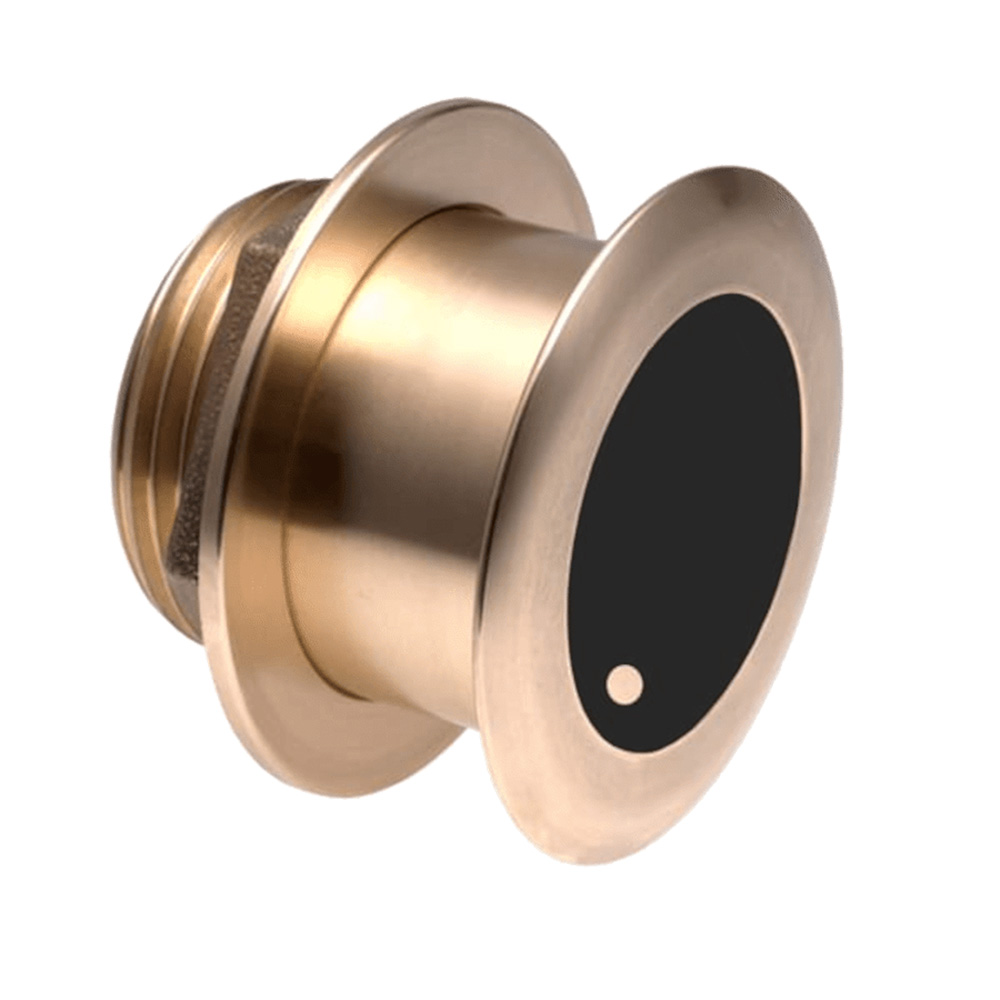
 Click to enlarge
Airmar B164 Bronze Thru-Hull - 50/200 kHz - 1 kW - 12° Tilted Element - Requires Mix & Match Cable
Manufacturer: AirmarPart #: B164-12-MMSKU: 113442
- 600W
- 50/200 kHz
- 9-pin
- 6 lb
- 22°
- Thru Hull
Item #: 113442
Category: Transducers
● In stock — ships fast from US warehouses
- Ships from US warehouses
- Free shipping on orders over $99
- Secure checkout — your info is protected
- Genuine marine-brand parts, not knockoffs
- 30-day returns
- Marine parts support — we know boats
Description
B164 Bronze Thru-Hull - 50/200 kHz - 1 kW - 12° Tilted Element - Requires Mix & Match Cable 12° tilted version for 8 to 15° hull deadrise angles. Step up to a 1 kW—without a fairing!
The 1 kW, flush-mount, Tilted Element™ transducer is perfect for fast, trailered vessels that cannot accommodate a High-performance Fairing. The flush-mounted, bronze housing extends less than 6.
35 mm (1/4") below the hull so that it can sit on trailer rollers and bunks. The ceramic arrays are tilted within the housing, providing a perfectly vertical beam with maximum energy at the point directly below the boat.
Features: Depth and fast-response water-temperature sensing 1 kW of power Dual-frequency elements: 50 kHz with a wide 22° beamwidth for depth performance to 549 m (1800') 200 kHz with a 6° beamwidth for depth performance to 244 m (800') Interfaces to any 600 W or 1 kW echo sounder Engineered for center-console and trailered boats Low-profile bronze housing extends less than 6. 35 mm (0.
25") below the hull No effect on the boat’s running performance Available in a stainless steel housing (SS164) for use in all hull materials Patented Xducer ID® technology Specifications: Acoustic Window: Urethane Cable-Length: 2 M (6. 5') Common Use: Leisure/Yachting, Fishing Connector: Airmar 9-Pin (MM1) Conventional Beam: 22°x20°/6° Country of Origin: USA Deadrise Range: 8° to 15° Frequency Band: 50/200 kHz Material: Bronze Max Deadrise: Up to 15° Max Depth: Low frequency- 549 m (1800'), High frequency- 244 m (800') Mix and Match Series: 9-Pin 1000 Watt Mounting Style: Tilted Element Thru-Hull Retractable housing: No Sensor Connector: MM1 Single or Dual Frequency: Conventional Dual Frequency Tilt Angle: 12° Tilted Element: Yes Weight: 2.
7 kg (6 lbs) Power Rating: 1 kW Functions: Depth, Temperature Hull Material: Fiberglass or wood Max Vessel LOA: Up to 11 m (36') Hole Size: 95 mm (3-3/4") Usable Shaft Length: 71 mm (2. 80") Display Connector: Cable Required
Specifications
| Brand | Airmar |
|---|---|
| Part Number | B164-12-MM |
| EverTide SKU | 113442 |
| Power | 600 W |
| Frequency | 50/200 kHz |
| Connector | 9-pin |
| Mount | Thru Hull |
| Material | Bronze |
| Beam Angle | 22° |
Specifications are provided by the manufacturer. Confirm fitment for your application before ordering, or contact us and we'll help.
Compare similar products
 |  |  |  | |
|---|---|---|---|---|
| Power | 600 W | — | 300 W | 600 W |
| Frequency | 50/200 kHz | 112 kHz | 155 kHz | 50/200 kHz |
| Connector | 9-pin | — | 8-pin | 9-pin |
| Mount | Thru Hull | In Hull | Thru Hull | Thru Hull |
| Material | Bronze | — | Bronze | Bronze |
Complete your setup
Airmar 599 Low/High Frequency - In-Hull Chirp Transducer w/o Connector
$6599.00Airmar B150M Bronze 20 Degree Thru-Hull 300W 8-Pin
$459.99Airmar B164 Bronze Thru-Hull - 50/200 kHz - 1 kW - 20° Tilted Element - Requires Mix & Match Cable
$1264.00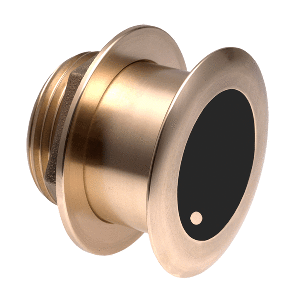
Airmar B175 Medium Ultra-Wide 1kW 12-Degree 12-Pin Connector f/Garmin
$2199.99Returns & warranty
Returns are accepted within 30 dayson items that are unused and in their original packaging. Some items may be subject to a manufacturer restocking fee. Special-order items may not be eligible — if you're unsure, ask us before ordering.
Airmar productscarry the manufacturer's standard warranty. For a warranty claim or a return authorization, see our full returns policy or contact us.
Marine Navigation & Instruments — frequently asked
- What’s the difference between a chartplotter and a fishfinder?
- A chartplotter shows your GPS position on electronic charts for navigation. A fishfinder uses sonar to show what’s below the boat — depth, bottom structure, and fish. Many modern units combine both, and networked systems can share data across displays.
- Do I really need a VHF radio?
- For safety, yes. A VHF radio is the primary way to reach other vessels and the Coast Guard, and a DSC-equipped VHF connected to GPS can transmit your position in an emergency. It’s more reliable than a cell phone offshore and is the recognized standard for marine distress calls.
- What is NMEA 2000 and do I need it?
- NMEA 2000 is a standard network that lets marine electronics — chartplotter, sonar, autopilot, sensors, engine data — share information over a single backbone. It’s not required for a simple setup, but it makes multi-device systems far easier to expand and integrate.
Customer reviews
No reviews yet — this product.
Fast shipping
Ships from US warehouses — free over $99
The right part
Marine-grade parts matched to your boat
Real support
Questions? We know boats — call or email